
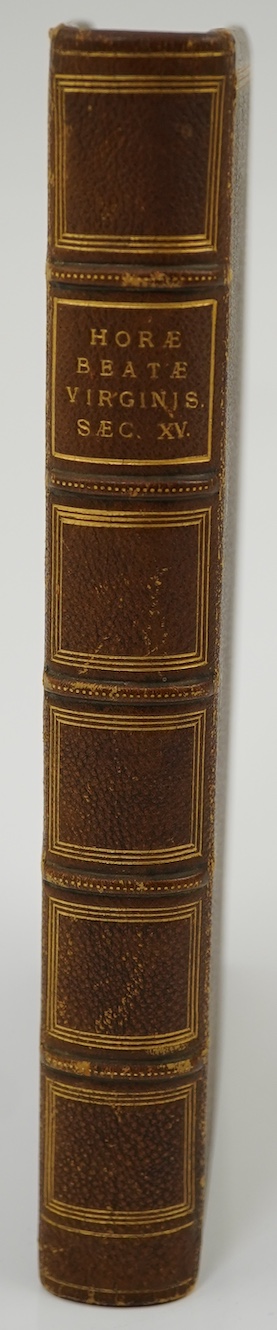
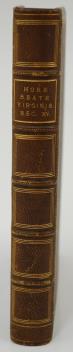
Lot 1054 , Psalter Hours of the use of Sarum; English, probably London, third or fourth decades of the 15th century., Bound in late 19th century leather, tooled in gilt, the spine embossed: HORÆ BEATÆ VIRGINIS SÆC XV. ; marbled end

° Psalter Hours of the use of Sarum; English, probably London, third or fourth decades of the 15th century.
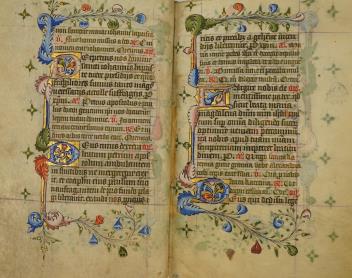
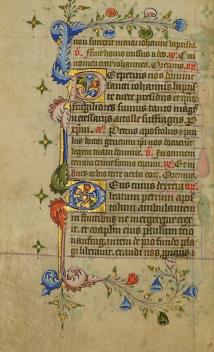
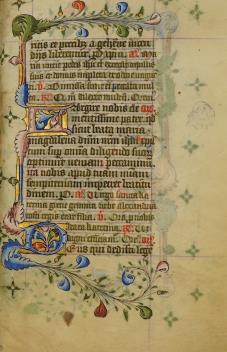
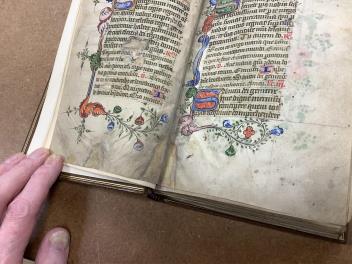
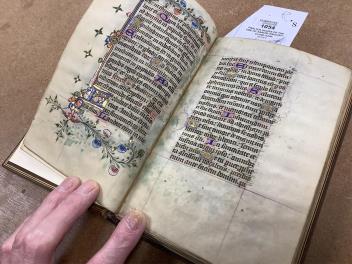
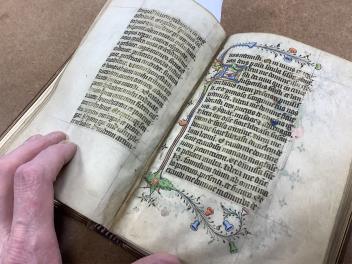
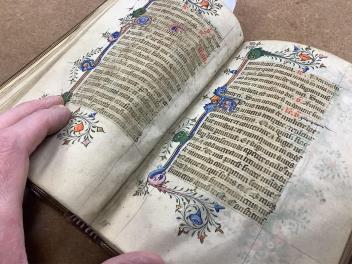
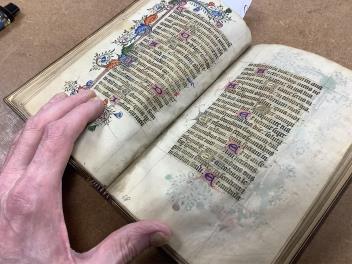
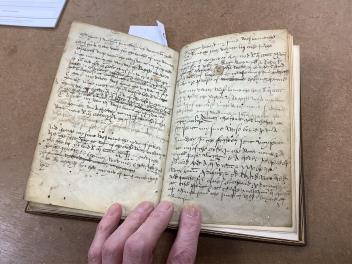
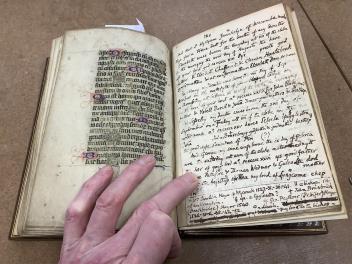
Bound in late 19th century leather, tooled in gilt, the spine embossed: HORÆ BEATÆ VIRGINIS SÆC XV. ; marbled endpapers; 99 parchment folios, 18.5 x 12.5 cm; written space occupies 11.4 x 6.8 cm at 20 lines per page; minor worm damage from folio 75, not affecting text; three-sided illuminated borders in blue, green, coral, white and liquid gold employing trumpet, kidney and gold ball with green squiggle motifs; initials in blue and gold with rubricated surrounds; corrections accomplished by deletion, interlineation, margination or cancellation by rules in black or red ink; foliated c1900; folios 98 and 99 bear records of the births of the children of William Junklin and Thomas Chalfont of Wycombe in Buckinghamshire, 1523-1546 Notes
The illuminations resemble those in dated examples of third or fourth decades of the 15th century to be found in Kathleen L. Scott - Dated and datable manuscript borders c1395-1499 (Bibliographical Society, 2002). A parallel British Library Additional Manuscript 50001, a book of hours of the Use of Sarum known as ‘The Hours of Elizabeth the Queen’, England (probably London), 1420-1430. Much of the text can be followed from a printed book of hours, published in Paris by Anthoine Vérard, in the first decade of the 16th century (Copenhagen Konglige Bibliotek CMB Pergament 19 4o).
This volume has been mutilated by the excision of its large-scale illuminations and perhaps of other text. The entire calendar, lessons and passion are wanting; in all there are over 30 discontinuities in the text, representing excisions of one or more folios, although the stubs of only four can be observed. Nevertheless the manuscript proceeds in the expected order, and there is no suggestion that its leaves have been rearranged.
A concordance of the surviving folios follows.
At two points in the text are prayers for ‘your servant H’; the Latin famulum tuum H enables his gender to be established, but regrettably not his name. Nonetheless it is clear that the book was created for an individual and was not an off-the-shelf production.
In accordance with the proclamation of 1534 the word papa (pope) was erased from the verso of folio 24, although a reference on the verso of folio 30 to St Thomas of Canterbury, which should have fallen victim to a similar injunction, has survived.
Folio’s
[Hours of the Virgin: Ad Matutinam]
1-2 Psalm 23 v4 [nec juravit in dolo proxi]mo suo to verse 10; office of the virginMary, lessons 1-3; Te deum to Tibi che[rubim …]
[Hours of the Virgin: Ad Laudes]
3-6 Psalm 99 v3 [populus eius et oves] pascue eius to verse 5; Psalm 62 v1-12; Psalm 66 v2-8; Benedicite; Psalm 148 v1-14; Psalm 149 v1-9; Psalm 150 v1-2 Laudate eumin vi[rtutibus eius]
7-9 Luke 1 from v60 [benedictus Deus Israhel quia visi]tavit et fecit redemptionemplebis sue to v79; prayers and antiphons to Deus cuius dextera, ending exaudi nospropitius et [concede …]; catch-word concede in the right margin at the foot of the folio.
10 prayer Deus qui beatum Nicholaum from [ut eius mer]itis et precibus…; prayers and antiphons, ending corpora
[Hours of the Virgin: Ad Primam]
11 Psalm 117 from v21, [confitebur tibi quoniam ex]audisti me to v29; prayers, capitulum; Gloria patri et filio et spiritui sancto with marginal catch-words Ave Maria
[Hours of the Virgin: Ad Tertiam]
12 Psalm 119 from v7 [cum loquebar illis, impugna]bant me gratis; Psalm 120 entire; Psalm 121 entire
[Hours of the Virgin: Ad Sextam]
13 Psalm 126 from v3 [ecce haereditas] domini to v5; Psalm 127 entire; capitulum Et radicavi; oratio Concede nos famulus tuos…
[Hours of the Virgin: Vespers: hours of the cross]
14 Hymn Ave maris stella from v4 [su]mat per te precem to end; Magnificat; Antiphon.
15 prayer to the Virgin Mary from [dixisti angelo per]cutienti populum tuum to end; prayer to the Trinity; hymn to the virgin ending with rubricated Merci et grace Iehsus Amen.
16 suffrage for relics, [Propiciare quesumus domine nobis] famulis tuis per sanctorum tuorum…; Compline to Et averte iram tuam a nobis; De[us in adjutorium…]
one folio excised.
17-22 Psalm 44 from v5 [et in]tende prospere to end; Psalm 45; Psalm 86; antiphon for Feria 4; Psalm 95; Psalm 96; Psalm 97; lessons 1-3; verse Paries quidem filium setvirginitatis non pacieris detrimentum efficieris gravida et eris mater [semper intacta]
23-24 Oratio Bernardi confessoris; prayer Benedicatur hora; prayer of Pope Benedict (the word pope expunged in accordance with the proclamation of 1534) at the elevation, ending et dedit omnibus confessis et contri[tionis] …
25-28 text in French on sin, beginning … covatye. Par ne souvent et par envie and ending with the benefits of saying the prayer every day; another French prayer on sin; prayer to the virgin O intemerata et ineternum benedicta… ending corpus meum et animam meam commend out omnibus [horis atque momentis]
two folios excised.
29 Prayer Obsecro te domina sancta Maria, beginning at Et per illam sanctam et maximam compassionem… to septem opera misericordia complere me faciat, duodecim articu[los fidei et decem precepta legis …]; recto bears guide-lines for illumination which has not been applied.
one folio excised.
30-32 begins … nos redimisti; Libera me domine, including the passage libera me domine H famulum tuum; prayer of St Thomas of Canterbury Adonay domine deus…; prayer of St Bede, ending infinita seculorum secula Amen; verso bears guide-lines for illumination which has not been applied.
33-38 Psalm 31 from v5 [De]lictum meum cognitum to end; Psalm 6 complete; Psalm 50 complete; Psalm 101 complete; Psalm 129 complete; Psalm 142 v1 to v10, Spiritus [tuus bonus deducet….]
39-44 Psalm 133 from v3 [Benedicat te] dominus ex Sion to end; Litany from Kyrieleyson to semper optaverunt piis suppli[cationibus consequantur], following the order of Anthoine Vérard’s printed psalter; at foot of f44 the yere of [c1520] Office of the dead.
45-65 Psalm 114 from v7 [Converte anima mea in requiem tuam] quia dominus benefecit tibi to end; abbreviated psalms and antiphons; Psalm 9 entire; abbreviated antiphons and responses; Psalm 145; office of the dead; Psalm 37 entire; Psalm 7entire; antiphon, verse and response; lessons from the Dirige (Parce michi domine; tedet animam meam;manus tue fecerunt me); Psalm 22 entire; Psalm 24 entire; (folio 51v catch-word universi); Psalm 26 entire; lessons 4, 5 and 6 from the Dirige(Quantas habeo iniquitates; Homo natus de muliere; Quis mihi hoc tribuat); Psalm 39 entire; Psalm 40 entire; Psalm 41 entire; lessons 7, 8 and 9 from the Dirige (Spiritus meus attenuabitur; Pelli mee consumptus adhesit; Quare de vulva); f59v catch-words domine et pone; Lauds: antiphons; Psalm 29 entire; prayer pro pluribus defunctis to animabus famulorum famularum.
66 Hymn, [Salve sancta facies] from nos consorcio iunge bea]tarum; prayers to the holy face; prayer, Deus qui nobis.
67-86 Psalm 118 from v18 [Revela oculos meos] et considerabo mirabilia …to end(v60 added in margin; f75v catch-word eloquia); Psalm 138 to v14 confitebur tibiquia terribiliter magnifi[catus es; mirabilite opera tua….]; (f79v catch-word a domine)
87 Preface to Jerome’s abbreviated psalter – Beatus vero Ieronimus… Concede domine [Jhesu Christe, ut isti psalmi…] differing from the standard text.
88-90 Jerome’s psalter from Psalm 18 v13 [Delicta quis intelligit?] ab occultis meismunda me… to Psalm 142 servus tuus sum; (f87v catch-word me ab).
91-92 Prayers, [Oratio post Psalterium] Deus pie exaudibilis clemens et benignus; introduction to eight verses of the psalms Invenitur in libro beati Bernardi quod diabolus…; verses from psalms 12, 30, 38, 115, 141, 85; rest of folio 92 blank.
93 Psalm 21 from v16 [lingua mea adhaesit faucibus me]is: et in pulverem mortis… to v28 universi fines terrae; et adora[bunt in conspectu eius…]
94 Psalm 24 from v3 [Neque] irrideant me inimici mei to v17 de necessitatibus meis[erue me]
95-7 imprecation on behalf of hunc famulum tuum H; Psalm 88 entire.
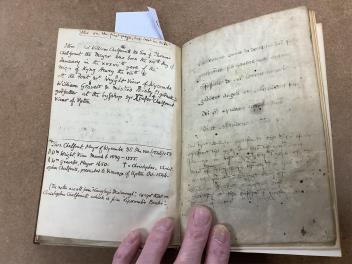
98-99 inserted transcript, on paper, of folios 100-101.
100 Prayer for the feast of St Anthony Gaudeamus omne in domino diem festum celebrantes sub honore beati Antonii confessoris de cuius commemoratione gaudentangeli et collaudant filium Dei; Psalmus: exultate justi in domino, rectos dicet [rectedecet] collaudatio; Gloria patri.
100-01 memoranda of the births of the children of William Junklin of Wycombe and of the children of Thomas Chalfont, 1523-1546.
Folio 100
Item that William Chalfount the son of Thomas Chalfount the mercer was born the 13th day of January in the 37th year of the reign of king Henry 8th [13 Jan 1546]; and his Godfathers at the font Mr [William] Wryght vicar of Wycombe, Mr William Gravett and Mistress Busby Godmother; and Godfather at the bishop [confirmation] Sir Christopher Chalfount vicar of Upton.
100v
Memorandum that I William Junckelyn of Wycombe make this for a true date for the birth of my daughter Elizabeth [she] was born the Tuesday at 4 of the clock in the morning the 28 day of August the year of our lord God 1523. Sir W True priest Godfather and Elizabeth Chalfount and Clemence Hastebrok Godmothers and at confirmation Elizabeth Dene her nurse.
And Mary my daughter was born the 8 day of September in the nativity of our blessed lady on a Thursday between 4 and 5 of the clock in [the] morning in the year of our Lord 1524 Sir John Blake Godfather and Isabel Darell and Joan Tomer Godmothers and bishop
And Cicely my daughter was born the 22 day of December on a Friday at 4 of the clock in the afternoon in the year 1525 Cicely Yngellston [and] Joan Fley and John BrasebrygGodfather and Godmother bishop the goodwife Saunders of Penn
And George my son was born the 9 day of February the Saturday at one of the clock after midnight the year of our lord 1526 his Godfather George Petefere and Thomas Wedmer and Alice Lee Godmother and at the bishop Sir Hugh my lord [the bishop] of Lincoln’s chaplain.
Folio 101
Memorandum that Robert my son was born the 20 day [of] June the Saturday at 4 clock in the morning the year of our Lord 1528 Sir Robert Kyng vicar of West Wycombe and Robert Astbroke Godfathers and Joan Weste of Lane Hend Godmother and Mr Vicar of Woburn at confirmation Godfather and chantry priest of Hokynggame
Ann my daughter was born the year 1529 the 16 day of August on a Monday at 6 of the clock in the afternoon Sir Edmund Godfather Agnes Wedmer and Joan Grafte Godmothers; and Agnes Chalfont Godmother at confirmation
Vincent my son was born on a Sunday in the feast of St Vincent [22 January] at 4 of the clock in the afternoon and a little past within D[imidium – half] an hour in the year of our Lord 1530 [1531] William Graffuth and Edward Welhed Godfathers and Alice LycheladGodmother at the font and at confirmation Mr Chayne of Amersham and the son of Drew Chayne of Amersham
101v
Memorandum that my wife Margaret was brought a bed of Roland her first child the 3 day of December viz a Wednesday at half hour after 5 of the clock after midnight in the year of our lord 1533
Memorandum that my wife Margaret was brought a bed on a Friday at 10 of the clock afore midnight the 16 day of April the year of our Lord 1535 of William my son of the reign of king Henry the 8th the 26 year
Margaret … the 19 day of April the year of our lord God 1536 upon a Wednesday in the afternoon between 11 and 12 of the clock before midnight William Lycched Godfather and … Cary and Elizabeth Pusy Godmothers and at the bishop John …
The will of William Chalfont the elder of Chipping Wycombe, 19 October 1543, was proved in PCC 9 February 1544: TNA PROB 11/30/14
Requests burial in the grave of his late wife Margaret in the Bower Chapel in Wycombe church; retained chambers in London in 1543; daughter Mary at marriage or 21; daughter Barbara at marriage or 21; son William at marriage or 21; son Peter at marriage or 21; share of any dying to be distributed among the survivors and to sons Robert and Roland Chalfont [presumably over 21]; wife Elizabeth; son Thomas; lease to descend in this order: Thomas, Robert, Roland, Peter, William; daughter Cecily the wife of Thomas Marten; estate in Wycombe lately purchased from William Junklin.
The will of Elizabeth Chalfont of Chipping Wycombe, widow of William Chalfont, 2 January 1560, was proved in PCC 29 January 1565.
Requests burial in the grave of her late husband William Chalfont in the Bower Chapel in Wycombe church; names Sir Christopher Chalfont son of William Chalfont the elder, William Chalfont’s children Lucy wife of Thomas Wydmore the elder, Cecily wife of Thomas Marten, her son Roland Chalfont, her son Mary Gravett, widow, her son Peter Chalfont, her daughter Barbara Chalfont; her son William Chalfont executor.
Between 1538 and 1544 George Junklin, son and heir of William Junklin, brought a case in Chancery against against his stepfather Thomas Chalfont, gentleman and his wife Margaret, formerly wife of William Junklin: TNA C1/1016/82-85; between 1544 and 1547 Elizabeth Chalfont, William’s widow, and his son Robert brought a case in Chancery against William’s son Thomas and his wife Margaret, formerly wife of William Junklin, concerning (inter alia) a messuage called The Jaylhouse’ in Aylesbury: TNA C1/1016/83, counterclaim C1/1109/14; between 1544 and 1551 William Junklin’s children George, Elizabeth, Mary and Ann brought a case in Chancery against their stepfather Thomas Chalfont and his wife Margaret, formerly wife of William Junklin, whose will failed to name an executor: TNA C1/1135/63-66.
William Chalfont of Gray’s Inn (where in 1523 he was assessed for the lay subsidy on £40) and of Aylesbury and Wycombe was an attorney in the Westminster courts between 1505 and 1540; steward of Medmenham Abbey c1535; alderman of Chipping Wycombe, steward of the court of Datchet and trustee for the Berkshire manors of Sir John Norris; his will mentions his ‘dettes of dogettes’ as an attorney; a Roland Chalfont was a member of Clements Inn in 1552-53 and 1561; Thomas Chalfont of Aylesbury was principal of Staple Inn in 1536 and 1537, and of Wycombe in 1547; he was an attorney in the Westminster courts between 1531 and 1560 and filazer in the Court of Common Pleas from 1541-1565+; Peter Chalfont of Wycombe was a member of Barnards Inn in 1565; John Baker, The men of court 1440 to 1550 (Selden Society, 2012) 449-50; History of Parliament.
Roland Chalfont was steward and town clerk of Wycombe in 1566: Visitation of Buckinghamshire, 1566, 49.
His brother, William Chalfont, sat as MP for Wycombe (with Roland Bracebridge) in 1545: History of Parliament.
William Junklin was one of the chamberlains of Wycombe in 1512; took a lease of a cottage from the corporation in 1517; was a burgess of Wycombe in 1518
GORRINGE’S are grateful to Christopher Whittick for cataloguing this lot.
£2,000-3,000
Condition:
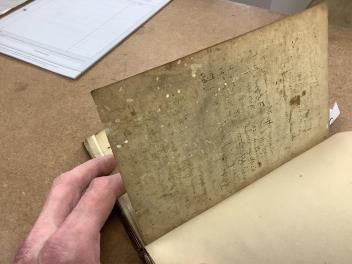
Many pages affected by damp, particularly close to spine; last two pages with evidence of woodworm. See further images as examples.
Sold for £13,000