
Lot 157 , Brighton interest - a rare early Victorian painted police truncheon, inscribed ‘Hundred of Whalesbone, Wm. Mighell 1844’, together with a reproduction truncheon., Mark Antony Lower stated in 1864 that the name Wellesbour
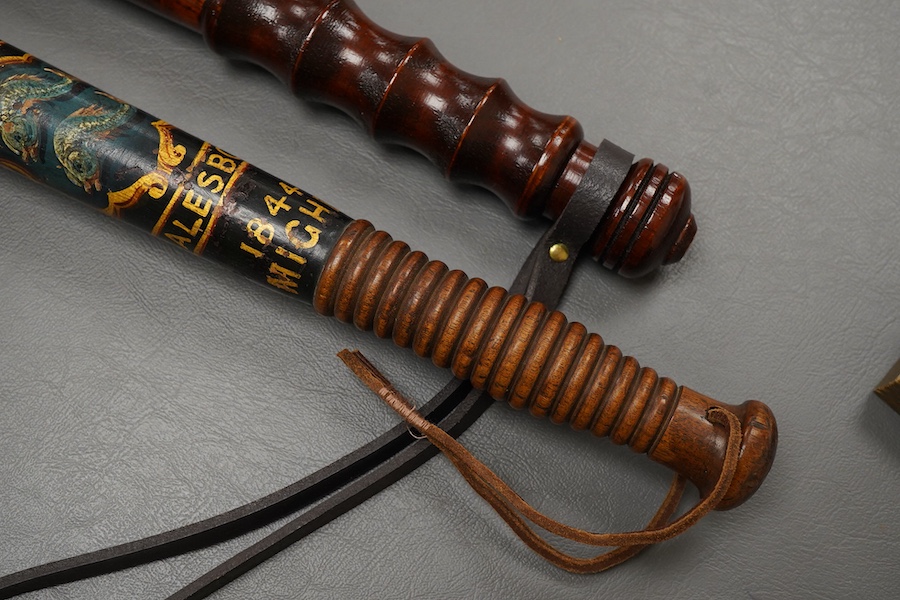
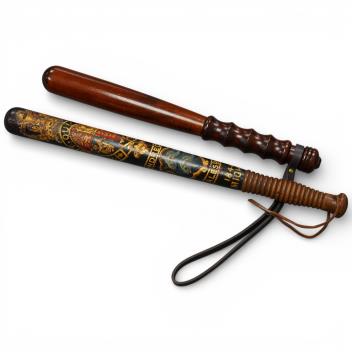
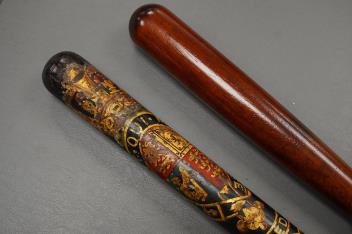
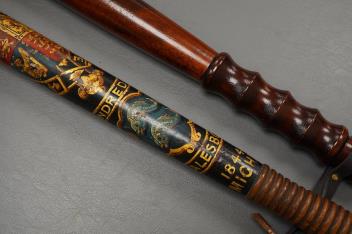
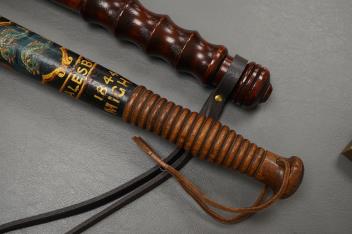
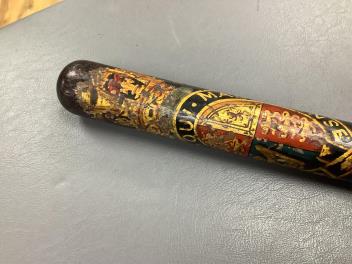

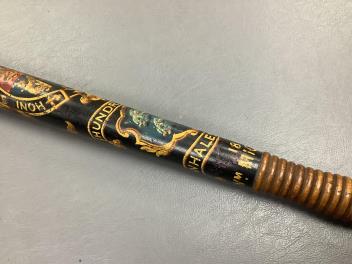
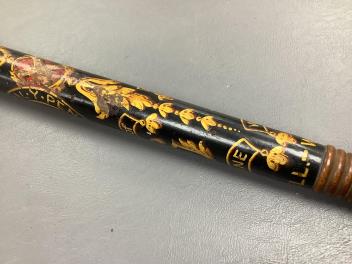
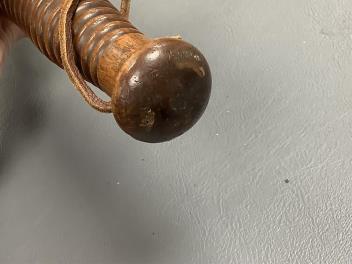
Brighton interest - a rare early Victorian painted police truncheon, inscribed ‘Hundred of Whalesbone, Wm. Mighell 1844’, together with a reproduction truncheon.
Mark Antony Lower stated in 1864 that the name Wellesbourne (Whalesbone simply meant "the stream flowing from a well". The Wellesbourne is presumed to have given its name to the Hundred of Whalesbone, also known as the Hundred of Wellsbourne, an administrative division within the Rape of Lewes which existed by the 13th century and in which Brighton and its surrounding parishes were situated.
William Mighell was a wealthy land owner in Brighton who inherited Cliftonville land from his Uncle Philip Mighell on 30 June 1851. William Mighell sold the land for £6,300 to George Hall, upholsterer, on behalf of William Kirkpatrick and Richard Webb Mighell.
£150-200
Condition:
Whalesbone 1844 losses to paintwork and gilding, see images, but no cracks or splits. 47cm; 18.5in. Other truncheon good.
Sold for £320